Who We Are
From the board room to the bedside, Treds is owned by two executive nurses who understand how to communicate the product at every level of the industry. Treds will bring value to the organization because of the value of Treds at the bedside. Treds is a simple, novel solution that will sell from the bottom up. Nurses and staff will see immediate value in the product because it is so simple. Nurses talk and their networks are extensive, success stories are shared in departments, hospitals and social networks.
Problem Worth Solving
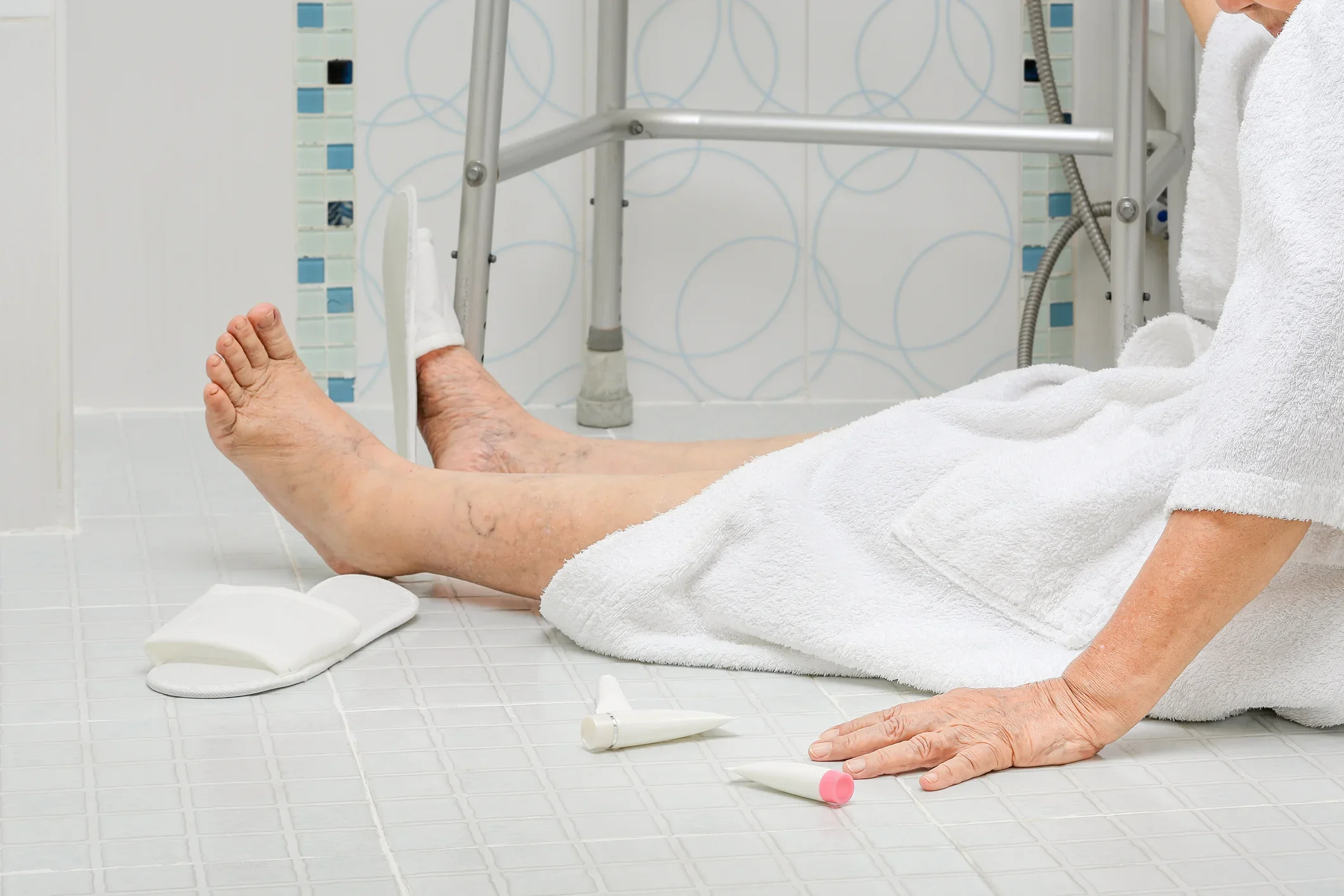
The current market for non-skid footwear is plagued with a multitude of design and application flaws. TREDS TECH™ addresses these issues with its innovative proprietary design.
Temperature Issues: Current footwear construction causes temperature issues for its end user. Routinely patients remove their safety footwear due to increased skin temperature caused by zero, or minimal, ventilation. Treds™ addresses this with a completely vented design.
Ill-Fitting Sizing: Due to variation in vendor sizing, patients are often provided ill-fitting non-skid socks. The TREDS STEP™ design provides a superb stretch material that conforms and contours comfortably to all feet, providing a secure non-skid footwear surface.
Incomplete Coverage: The non-skid properties of current market socks do not provide for complete coverage of the foot. Treds™ addresses this with its proprietary, full-coverage design.
Circulatory Issues: Decreased elasticity of current market products promotes constriction. Treds™ addresses this issue with maximum elasticity that promotes flexing of material to adapt to patient extremity conditions.
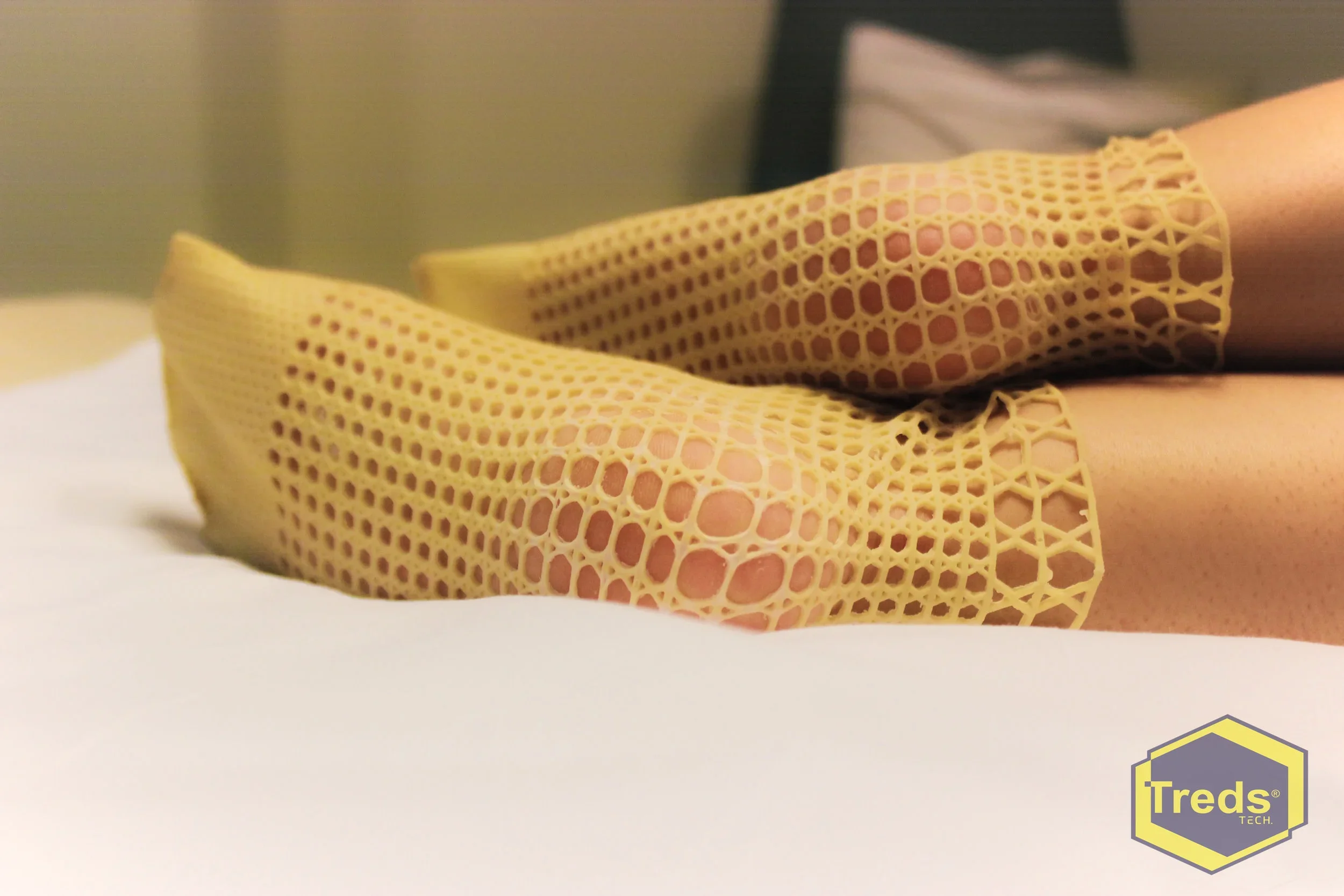
Easy Assessment: In order for healthcare workers to monitor circulation, they must often completely remove the non-skid sock. Treds™ addresses this with their honeycomb pattern that allows for easy visualization of the skin and accessibility to palpate pulses without removing footwear.
Our Solution and Product Overview
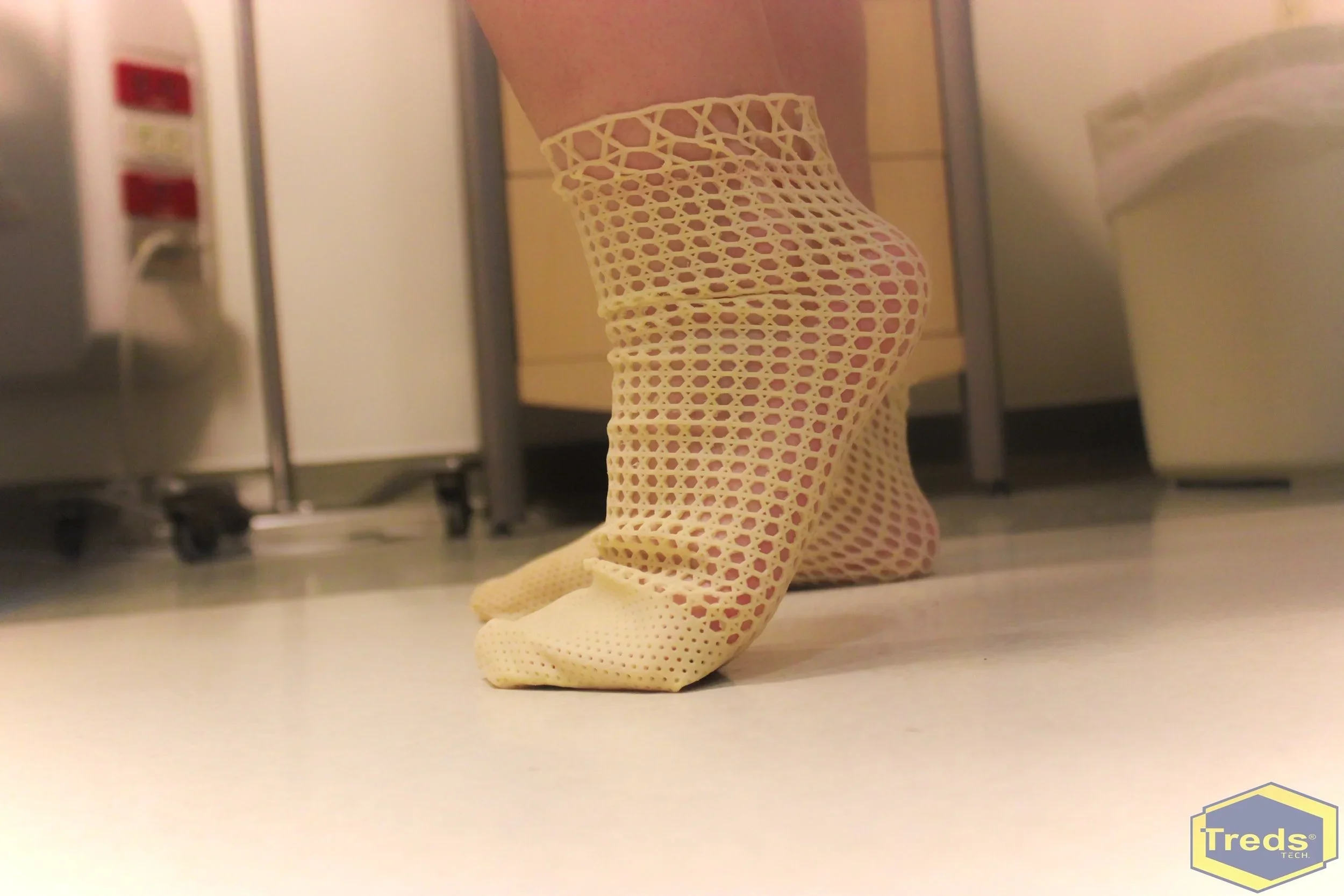
Product Description: TREDS STEP™ is a non-skid footwear product designed for fall reduction and prevention. This innovative proprietary, one-of-a-kind patented (pending) design provides complete foot surface contouring. Treds™ is nurse invented and nurse owned. This exclusive design, known as TREDS TECH™, will revolutionize safety footwear in the healthcare market.
Physical Description: Treds™ is a super stretchy, rubber-like proprietary anti-microbial polymer with complete 360-degree coverage of the foot. The product easily slips over the foot, socks, or even shoes, and provides increased non-skid security. The footwear is constructed with a honeycomb design. The design allows for optimal ventilation and visualization of the skin to improve ease of assessment while providing non-skid protection. The distinctive honeycomb pattern includes dense webbing at the toes, relaxed webbing through the body of the foot, and a slight flaring at the ankle opening. The dense webbing at the toes is designed to protect and secure the toes. The flaring at the ankle provides ease of application without constriction.
Where We Can Help
Hospitals
Patient falls resemble a plague for hospitals. According to the CDC there are between 700,000 to 1 million falls in acute care facilities annually. One in five of those cause serious injury resulting in over $31 Billion medical costs and damages. The average cost for each Fall is a staggering $30,000 and increases with age.
Tactics to reduce risk for falls cover both cultural (behavioral) and structural (engineering) controls. Much work and focus has been done in the industry to improve awareness and behaviors known to reduce falls like hourly rounding, positioning of equipment, pharmaceutical regimens, and general safety education instruction. Cultural changes are not effective for fall prevention due to staff unwilling to buy into increase tactics with no perceived value. Healthcare workers have ever increasing workload demands due to higher ratios and countless regulatory requirements. Little of these they deem provide any perceived benefit to their patient.
Structural controls like fall mats, bed rails/alarms, call lights, and non-skid socks have resulted in reductions of falls and severity of injury. Bed rails improve bed mobility for patients, facilitating turning, repositioning and even getting out of bed. For confused patients, rails can help remind to ask for help but for others they increase agitation, creating a sense of entrapment. For patients intent on ‘getting out’ rails create hurdle that increases the distance of the fall out of bed, worsening the chance and severity of injury.
Fall mats designed to reduced injury from falls, but do nothing to prevent them. They are strategically placed in hospital rooms and bathrooms so that patients have a soft place to land. Fall mats create an uneven surface easily disrupting the gait of patients at risk of falling, in some cases create falls.
In the milieu of nursing departments, the noise of alarms has created a numbing effect for staff. In many healthcare settings alarms ring incessantly from; cardiac rhythms, oxygen saturation, IV pumps, ventillators, bipap and cpap machines all alerting staff to issues from the critical to mundane. For fall prevention, hospital beds are designed with alarms to notify staff when patients begin or attempt to exit. Though this early alert can be helpful in some cases it is often too late to prevent the fall. Setting these alarms to more sensitive setting results in even more alarm fatigue.
Sitters often become the last line of defense for providers to prevent falls. Unfortunately, patients still fall at an alarming rate. Despite having help readily at hand patients still don’t have a solid base. Sitters often lack the training to properly move and protect patients against their risk for fall.
Nurses know which of these interventions work and don’t for their patients. When it comes to footwear, nursing staff are skeptical of the traditional, non-skid socks that we provide. When they stay on the foot, they frequently twist and turn, invariably with the ‘slick’ side down and cause falls. They also absorb moisture, further increasing risk <<DATA>>
SNF, Nursing, LTAC
Of the nation’s nearly 1.5 million nursing home residents, most would qualify for being ‘high risk’ for fall by conventional scales. In fact, 16.95 do fall, 5.4% suffer injury. These home like environments have solid surface flooring where Treds would optimize traction to reduce falls related to improper footwear.
Direct retail
As hospitals lead the path to safety with Treds application, patients discharging to home and skilled facilities will be presenting to these facilities with the footwear on. Staff in these homes and facilities will experience the benefits first hand easing the path to entry into the market. Retail markets would include anywhere that patients go for their healthcare needs; pharmacies, grocery stores and supermarkets. The hospital market penetration can be leveraged to enter the retail space.
As Treds becomes prevalent in the industry retail use of Treds would increase. As caregivers see the benefits of the non skid footwear, demand for use outside health care will increase. There will be numerous opportunities for branding Treds in the open market. Home health providers will help drive the adoption.
Boutique Hospitals
Small, private hospitals, usually physician owned, present an opportunity for market entry. These facilities make local buying decisions based on improving outcomes and differentiation in their market. Though low volume sales would occur in this arena, larger systems look to these facilities for best practice and innovative improvements in care. Sixty minute cath lab times, advanced cardiac, GI care, one day and even outpatient total joint replacement surgeries were first perfected in this setting. Eventually these became mainstream practices. Treds could leverage the prestige from these facilities. A foothold in this sub market can kick start market penetration and demand.
Private Hospital Systems
Although smaller private and not for profit systems are dwindling in number a value opportunity like Treds will be attractive to facilities in this market. Beginning with facilities struggling with fall bundle compliance (poor outcomes), leadership teams have a personal stake in fall reduction, ease of compliance and operational efficiency. Hospitals stressed with facility acquired falls/injury will be ripe for an improvement opportunity. Treds presents that simple one-size solution to their fall prevention bundle. Changing to the Treds product shakes up the norms in fall reduction program, traction will come as the staff welcome simplification, ease of use and steady gait that Treds provide.
Large Provider Systems and Distributers / Hospital Purchasing (buying) Groups
Sales strategies to larger systems are linked to availability of Treds in large distribution systems and as approved products in hospital purchasing groups. Direct marketing and sales at the system level involves relationships with both the purchasing staff as well as the risk, quality, and safety apparatus within the system. The key safety leaders in a system drive the behavior of all the partner hospitals. Their goal is uniform safety practices in all their hospitals. These leaders guide practice by creating policy and guidelines that are pushed down to member hospitals. The goal would be that Treds become, as slip resistant socks had, part of the baseline fall intervention for all patients. Sales at this level drive sales in all their affiliated facilities and services. Additional services in these larger systems may include nursing homes and home health agencies and may include facilities where they system provides only management services. These additional venues will help drive entry in these secondary markets.
Systems rely on buying groups to get the best prices so that they are ‘approved’ to purchase. Treds need to participate in these groups. To engage in these groups the volume for production and distribution must be there. A strategic partnership for production facilitates the economy of scale required to negotiate ‘best’ pricing for buying groups and distributers.
Secondary Markets; Nursing Homes, Home Health, Direct Sales
As hospitals lead the path to safety with Treds application, patients discharging to home and skilled facilities will be presenting to these facilities with the footwear on. Staff in these homes and facilities will experience the benefits first hand easing the path to entry into the market. Retail markets would include anywhere that patients go for their healthcare needs; pharmacies, grocery stores and supermarkets. The hospital market penetration can be leveraged to enter the retail space.